
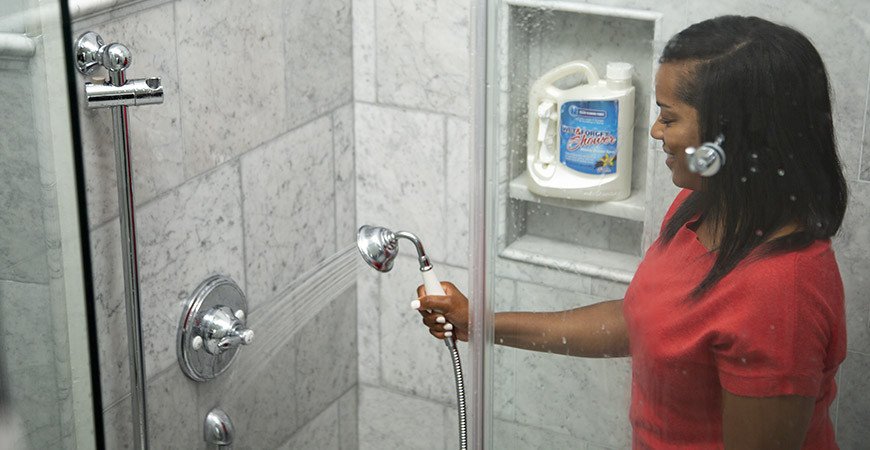
Natural stone showers require different cleaning products than ceramic or porcelain tile because acids, abrasives, and harsh chemicals affect each material differently. Marble, travertine, limestone, and slate contain minerals or pores that can stain, etch, or lose their finish.
Tile usually handles more formulas, although grout still needs careful treatment. Identifying the material, residue, and finish helps prevent permanent damage and guides the safest cleaning method for the shower.
A cleaner should first identify whether the shower contains marble, travertine, limestone, slate, or manufactured tile. That choice determines the cleaner’s pH, the needed agitation, and the risk of surface damage.
Homeowners comparing methods can review natural stone shower cleaning in Chicago for guidance on stone-specific cleaning and restoration. The assessment should also check grout, caulk, mineral deposits, etching, and sealer condition before cleaning begins.
Table of Contents
Why Natural Stone Needs Different Products
Natural stone reacts to acidic ingredients that tile often tolerates. Vinegar, lemon-based cleaners, acidic soap-scum removers, and some bathroom descalers dissolve minerals in marble and limestone. Etching creates dull patches, cloudy marks, and uneven areas that ordinary wiping cannot remove.
Abrasive powders create another problem. Scrubbing compounds can leave fine scratches across polished marble or damage the consistent finish on honed stone. A rough pad can also spread residue across textured surfaces instead of lifting it from the pores.
Stone-safe alkaline cleaners remove soap film without attacking the stone. Mechanical agitation loosens stubborn buildup, while a neutral cleaner suits regular maintenance after restoration work.
How Tile Cleaning Differs
Ceramic and porcelain tile have fired surfaces that resist many household cleaners. Acidic products still require caution because they can damage grout, metal fixtures, and nearby stone trim. The tile surface might survive the formula, but the installation can still suffer.
Grout remains porous even when the tile is nonporous. Soap, body oils, mildew, and mineral deposits collect inside grout lines, especially near corners and changes of plane. A cleaner must treat the grout without leaving acidic residue on adjacent stone.
Manufactured tile also varies in texture and finish. Glossy tile wipes clean more easily than textured tile, which holds soap film in recessed areas. Product instructions should match the tile surface, grout type, and level of buildup.
Match the Product to the Residue
Hard-water haze contains calcium and magnesium deposits that bond to shower surfaces. Acidic descalers remove those minerals from some tile, but they etch marble and limestone. Stone showers require gentle mechanical removal or professional honing when deposits bond tightly.
Soap scum contains oils, minerals, and product residue. A stone-safe alkaline cleaner breaks down that film without stripping the surface. A soft brush or nonabrasive pad lifts residue from grout lines and textured areas.
Dark grout, pink film, and black corner spots indicate biological growth or trapped moisture. Cleaning alone does not correct failed caulk or open grout joints. Replacing deteriorated silicone and repairing grout gaps prevents water from returning behind the finished surface.
Sealer Does Not Replace Cleaning
A penetrating sealer reduces absorption, but it does not create an impervious coating. Soap film still collects on the surface, and minerals remain after water evaporates. Regular wiping with a neutral cleaner keeps residue from hardening between deeper cleanings.
Water behavior provides a simple seal check. If droplets no longer bead on the stone, the sealer has weakened, and the shower needs resealing. Chicago-area stone showers often need this work about once a year because daily water exposure wears down protection faster than on a countertop.
Sealer also cannot reverse etching. Dull patches require honing with wet diamond abrasives, followed by polishing or rehoning to create an even finish. Cleaning removes residue, while surface restoration corrects damage beneath that residue.
When Professional Restoration Makes Sense
Professional service becomes practical when mineral scale, etching, mold, or failed grout covers a large area. A trained technician can identify the stone, select the correct abrasive grade, and control water during mechanical cleaning. That process prevents damage from spreading across the walls and floor.
Restoration can include deep cleaning, honing, polishing, grout color sealing, caulk replacement, and penetrating sealer application. Re-tiling is usually unnecessary when the stone remains intact and the substrate has not failed.
Homeowners should stop using a product if it leaves a dull mark, changes the color, or produces a rough patch. A small test area helps reveal compatibility, but severe damage requires an assessment before additional cleaning.
Conclusion
Natural stone shower cleaning requires a narrower product range than tile cleaning because stone reacts to acids, abrasives, and harsh chemicals. A pH-neutral cleaner handles routine care, while stone-safe alkaline products and mechanical agitation remove soap film without etching sensitive surfaces.
Homeowners should confirm the stone type, inspect grout and caulk, and test sealer performance before choosing a formula. If deposits or dull patches remain, professional honing and resealing address the cause instead of covering it.