
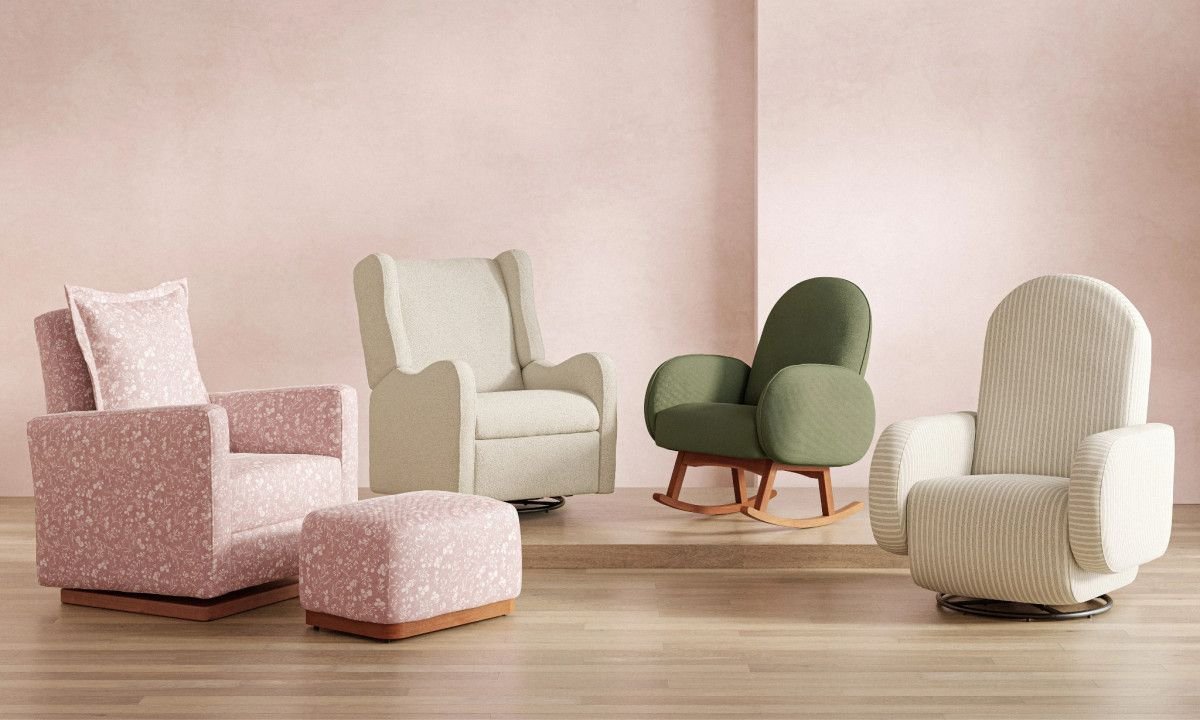
Most nursery seating decisions often focus on the chair, while the ottoman receives less attention. A glider supports feeding, soothing, and reading, while an ottoman improves comfort during longer sitting sessions. Matching pieces create a coordinated corner, but separate furniture can suit changing routines and smaller rooms.
The right choice of glider and ottoman depends on movement, clearance, storage, and daily use rather than a complete set. First-time parents should first think about the room’s overall esthetic and how each piece fits in.
Table of Contents
What A Glider And Ottoman Each Do
A glider moves along a fixed track, creating a smooth back-and-forth motion. Its movement pattern is smaller than that of a traditional rocker. This motion is ideal for nighttime feeds, soothing an infant, or reading beside a child.
Parents should compare the chair and footrest as separate pieces before choosing a set. A practical guide to the rocker and ottomans helps families assess movement, room clearance, storage, and daily comfort. While a coordinated ottoman completes the seating corner, a different shape can preserve floor space or provide storage. The right pairing should support the nursery’s layout and the daily routine.
A rocker uses curved legs and moves through an arc, giving the room a familiar chair profile. An ottoman supports the lower legs and lets a seated adult adjust position without sliding forward.
That support matters during longer feeds or story sessions. Resting the feet on an ottoman reduces pressure on the knees and lower back. A storage ottoman also keeps blankets, books, or other nursery items within reach.
When A Matching Ottoman Makes Sense
A matching ottoman makes sense when the chair supports frequent, extended sitting. During feeds, the footrest reduces the need to brace the legs or perch on the seat edge. That position helps a parent maintain steadier posture while holding a baby.
A matching piece also simplifies visual planning. Consistent fabric and proportions make the seating corner look deliberate, which suits a nursery with several finishes already in use. Matching upholstery can also minimize visible differences in color between the two pieces.
Room size also matters. The ottoman needs enough clearance for the chair to glide or rock without striking a crib, dresser, wall, or nearby toy. If the room lacks that space, a chair without an ottoman often creates a safer, more practical layout.
When A Separate Ottoman Works Better
A separate ottoman gives parents more control over placement and future use. A compact footrest can sit close during feeding, then move aside when a child needs floor space for play. That flexibility suits shared bedrooms, apartments, and rooms with narrow walkways.
A variety of materials can be used to better fit in with the household’s routine. The chair might use soft fabric for comfort, while the ottoman uses wipeable upholstery for spills and snack crumbs. The pieces can still coordinate through a similar color, shape, or leg finish without forming a matched set.
A standalone ottoman can also solve a storage problem. Storage ottomans provide space for blankets, books, or other nursery items. Storage helps only when the lid lifts easily and the unit does not obstruct the chair’s movement.
How To Decide Before Buying
The first step in the purchase process is to start with measurements. Mark the chair’s full footprint, then account for the space needed behind and in front of its movement. To see if there is a path around the seating area when an ottoman and chair are in place, you can use painter’s tape on the floor.
Next, consider the primary user. A taller adult needs adequate seat depth and leg support, while a smaller room may suit a compact glider. A recliner-compatible ottoman requires attention to leg position, opening space, and the chair’s operating area.
Check construction and care details carefully before choosing the upholstery. Nursery seating needs a sturdy frame and wipeable material. Families should also look for secure construction, no exposed pinch points, and enough distance from nearby furniture for safe movement.
The Practical Answer
A nursery does not automatically need both pieces. A glider or rocker handles the primary seating task, so the ottoman becomes worthwhile when it improves posture, comfort, storage, or room organization. Families who feed often in the nursery usually benefit more from a footrest than families who use the chair for brief visits.
A matching ottoman suits a room with enough clearance and a chair that will support long sitting sessions. A separate model works better when storage, flexible placement, or easier cleaning matters more than identical upholstery.
Conclusion
The best nursery setup matches actual routines rather than a furniture checklist. Measure the chair’s movement, decide whether leg support will improve daily comfort, and choose storage only if the room needs it. A matching ottoman creates a unified seating corner, while a separate model can adapt as the nursery changes.
Before ordering, tape the proposed footprints on the floor and check every walking path. That simple test shows whether both pieces improve the room or create unnecessary clutter.