
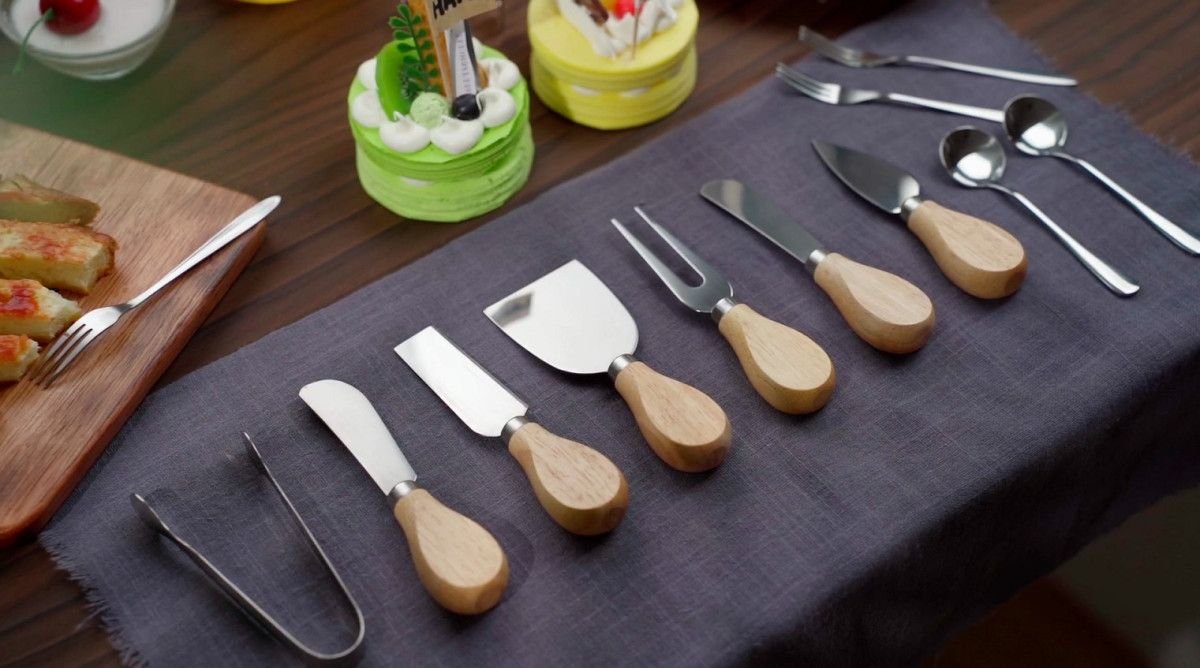
A strong charcuterie board depends on more than cheese selection or visual balance. Service affects texture, portion control, and guest comfort from the first bite onward. Many hosts give attention to cutters for aged wedges, then miss the utensil that handles Brie, crescenza, or fresh chèvre. That oversight leads to dragging, compression, and waste. A spreader knife brings order to soft cheeses, keeping the board attractive and the eating experience easier.
Table of Contents
Soft Cheese Needs Different Support
Soft cheeses respond poorly to narrow blades. Their paste clings, folds, and tears under pressure, especially once they warm on the board. In those moments, the best cheese spreader knife earns its place because a broad face lifts a full portion, then settles it onto bread or a cracker without crushing either surface. Guests serve themselves with less mess, and delicate selections keep their intended form much longer.
Width Changes the Result
Blade width changes how a creamy cheese leaves the board and lands on food. A slim utensil can move a portion, yet each pass covers very little surface. That smaller contact area creates streaking, uneven distribution, and repeated scraping. A wider spreader smooths one motion across the cracker, which supports a cleaner bite and a steadier texture throughout the gathering.
Cleaner Portions Mean Less Waste
Loss during service accumulates quickly with soft-ripened cheeses. Rich paste sticks to edges, drops onto wood, or gathers in clumps that no one wants. A proper spreader reduces that problem by supporting the portion from below rather than forcing a scoop from the corners. Better transfer means less product left behind, which matters when triple creams or fresh robiola is on the board.
Presentation Stays Neater
Appearance affects appetite before anyone tastes a thing. Smeared rinds, crushed garnish, and streaked preserves can make an otherwise careful board look tired within minutes. A spreader limits that disorder by moving soft cheese with control. Jams stay separate, herbs remain tidy, and crackers avoid breakage. Even a relaxed host can maintain visual balance without hovering over the platter.
Texture Survives the Transfer
Texture shapes flavor perception as much as salt or aroma. Bloomy-rind cheese should feel airy, while fresh goat cheese should remain plush and light on the palate. Sharp points or narrow knives can compress that structure during serving. A spreader slides under the paste, then lays it down gently. Each bite stays closer to the maker’s intended consistency.
The Right Build Matters
Construction affects performance in small but important ways. Stainless steel resists discoloration and cleans easily after contact with salted, high-fat foods. A solid wood handle gives the hand a steadier grip during service, especially when a board is crowded. Weight balance also matters. When the tool feels stable, the wrist makes smoother movements, and creamy cheeses keep their shape during transfer.
Size Can Improve Control
Dimensions influence control more than many buyers expect. A blade with enough length can lift a useful portion without forcing awkward wrist angles near olives, fruit, or cured meat. Adequate width helps distribute soft cheese in one clean pass rather than several short swipes. Balanced proportions reduce fumbling, which makes service feel calmer and keeps the arrangement intact.
Guests Notice Ease, Even Quietly
Most guests will never mention the utensil by name. They still register whether serving feels graceful or frustrating. When a soft cheese moves cleanly, people sample more confidently and return for another bite without hesitation. That quiet ease matters on a shared platter. Good hosting often depends on removing friction before anyone has reason to notice it.
One Tool Can Cover Extra Jobs
A spreader knife earns its space beyond the cheese board. It handles cultured butter, pimento cheese, tapenade, soft pâté, and other smooth accompaniments with similar control. That range makes it useful across breakfast, lunch, and evening snacks. Many specialty tools sit unused for long stretches. A well-shaped spreader proves helpful often enough to justify a permanent place in the drawer.
Conclusion
The most valuable serving tools are often the least flashy. A cheese spreader knife will never command attention like a dramatic wheel or polished board, yet its effect is practical and immediate. It protects structure, reduces waste, preserves presentation, and helps guests serve themselves cleanly. For anyone who includes soft cheese on a platter, this utensil deserves the same respect as the cheese itself.