
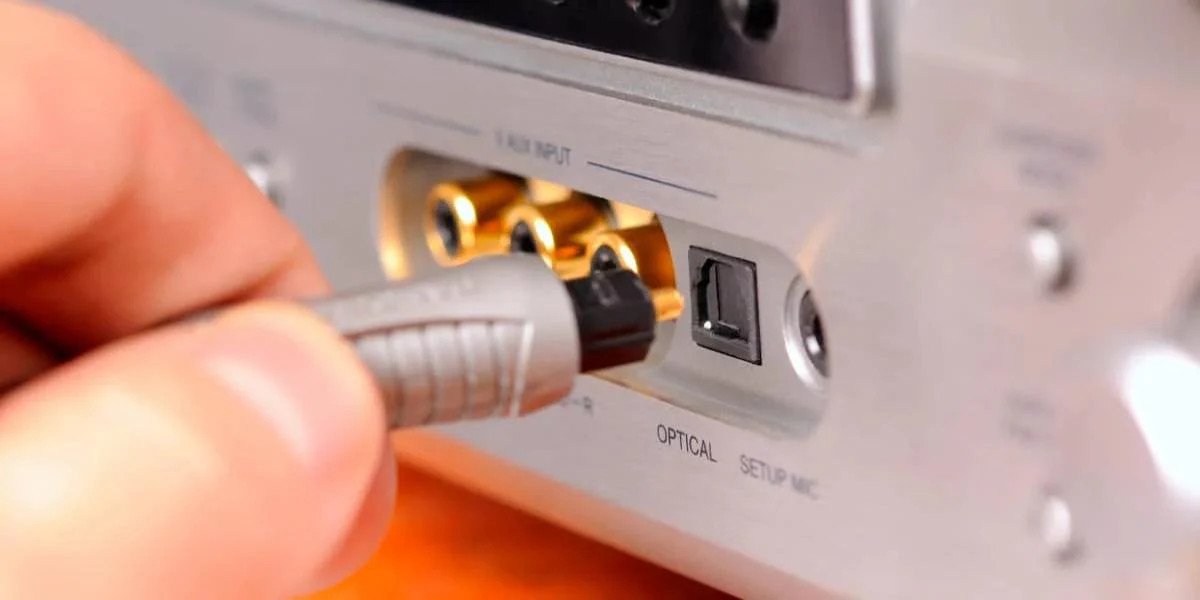
Choosing the right Optical Toslink cable is one of the most important aspects that you have to consider when using Optical Toslink. Length and construction might be of no significance to many. But those things do affect your sound quality and reliability, as a poorly constructed or excessively long cable can lead to signal degradation and a loss of audio fidelity.
Knowing some key things to look for is a huge help. Minimizing, measuring, and experimenting with cable quality and lengths gets users closer to achieving the results they deserve with their audio gear. This guide provides actionable insights to assist you in making the best choice.
Table of Contents
Understanding Optical Toslink Cables
An optical Toslink cable is one that sends digital audio signals via light. This connects sound sources such as televisions, sound bars, receivers, and gaming consoles. It is impervious to electromagnetic noise since it is based on light, not electrical signals. It acts as a high-pass filter, providing high resistance to low-frequency signals, ensuring a clean audio stream free of distortion.
Optical cables contain fiber optics that can carry signals over different distances with very little loss. The choice of the right cable allows for clarity and precision in the sound.
Why Cable Length Matters
For example, longer cable lengths can lead to signal attenuation. Longer cables sometimes can lead to signal loss, primarily if the distance is extreme. The farther signals have to travel, the more chance that they attenuate or become degraded. Cables are typically stronger and work better the shorter they are. Only purchase a cable if you have measured the required operating distance. Choosing the correct length prevents clutter and resource-heavy audio transfer.
Measuring the Needed Length
The distance between your devices must be measured before purchasing an optical Toslink cable. Trace the path from the output port to the input port, starting with the output port. Give yourself an extra for the sake of flexibility, but be careful not to make them too long. This helps avoid aggravating tangling and keeps a clean setup. Shorter cables generally perform better, so keep that in mind. Choosing the path of the cable route with consideration minimizes the bends and sharp turns that could break the fiber.
Evaluating Cable Quality
Audio quality very much defines your performance. Seek out cables with strong bonding points and high-quality outer sheaths. Good connectors reduce the chance of signal loss and fit more snugly. The outer layer must prevent physical damage to the delicate fiber inside. Gold connectors appear on some cables to resist corrosion and maintain a solid connection. Employing quality materials guarantees durability and sound consistency.
Understanding Connector Design
The design of the connector also impacts its ease of use and durability. One features a firm grip deploy, and we find it easier to insert and remove some connectors. This is a high-quality indefinite connector, capable of maintaining the connection even after several years, without the need to unplug it. If the connectors are too loose, that could cut off the signal; some poorly made connectors caused the same issue. A cable with poor connectors can sometimes cause audio dropouts when it gets moved, so opt for a quality cable. If you are going to plug and unplug often, the answer needs to be a more rugged cable that is built to handle that.
Considering Build Materials
The external sheathing is flexible but hard—and it serves to protect internal fibers from bending and breaking. Typically, damaged cables occur at connection points, which is why some cables feature a reinforced end to reduce this risk. Good materials guarantee that the cable is able to endure everyday wear and tear, in addition to environmental stress. That robustness becomes crucial when the cables wind around furniture or other obstacles.
Checking for Certification and Standards
Approved cables are compatible and deliver performance as per high industry standards. Check for cables that meet the defined digital audio cable specifications. Certifications provide assurance of a thorough quality check on the product. It can avoid complications such as signals falling or the lack of recognition of one device by the other. Generally, trustworthy products mention their compliance directly on the packaging or product description.
Conclusion
A better experience comes from measuring it all very carefully, keeping the construction durable, and matching features to audio needs. Users help ensure excellent performance and clear sound by looking for these elements. When paired with a proper cable, audio equipment performs at its peak, delivering sound in the way it was designed to. Good curation results in fewer problems and more listening pleasure overall.