
A long-distance car transport requires more than selecting a price and booking a carrier. The transport type you choose affects how the vehicle is handled, how much exposure it faces on the road, and how predictable the overall process feels.
Open and enclosed shipping each serve a clear purpose, yet the right option depends on distance, timing, and the vehicle itself.
In the sections below, you will see how both methods work, where the key differences appear, and how factors like seasonality and high-demand routes, including New York to Florida, influence availability and pricing.
Table of Contents
What Is the Difference Between Open and Enclosed Car Shipping?
The difference is pretty straightforward once you look at how the cars are actually moved.
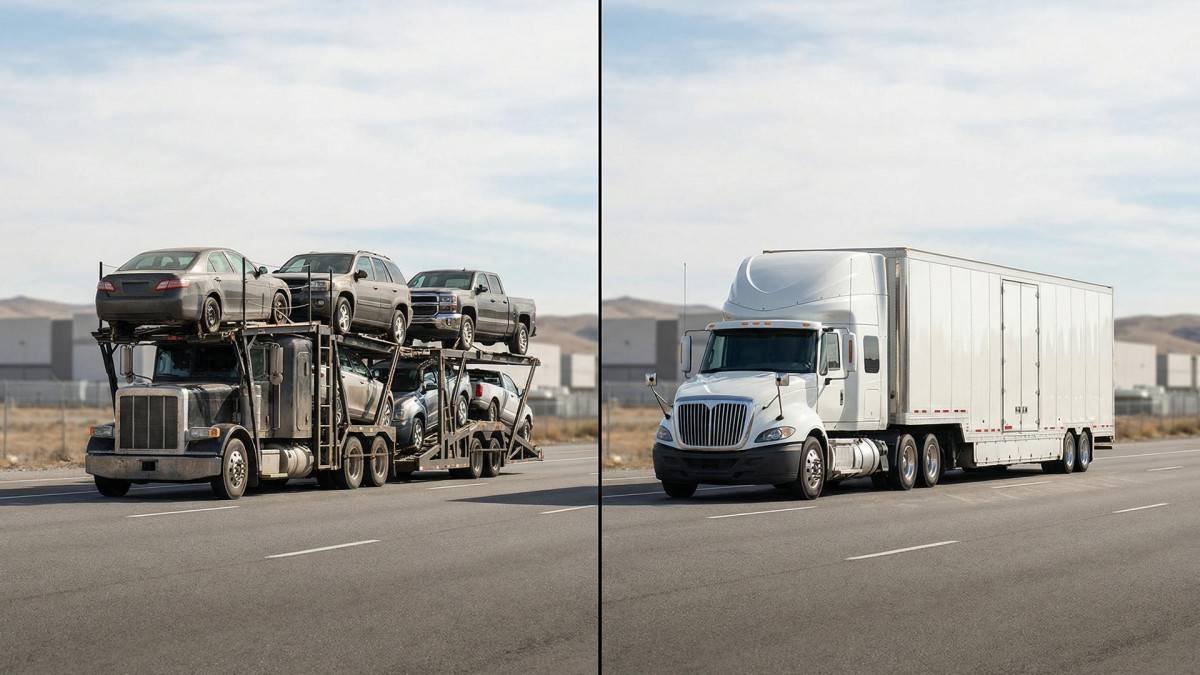
With open transport, vehicles sit on a multi-car trailer, fully exposed. You’ve probably seen these trucks on the highway, stacked with cars. They usually carry around 7 to 10 vehicles at once, which is exactly why this option is cheaper and easier to book. In most cases, this is what people choose, simply because it works and it’s widely available.
(Source: https://www.carcareroutine.com/blog/auto-transport-industry-trends/)
Enclosed transport takes a different approach. Fewer cars are loaded, and everything stays inside a covered trailer. That changes how the vehicle is handled from start to finish. There’s less exposure, fewer touchpoints, and overall, it feels more controlled.
The price gap is noticeable. Enclosed shipping usually costs about 40–60% more.
Personally, this is where the decision becomes less about specs and more about comfort. If it’s a standard daily car, open transport makes sense. But if the vehicle holds real value, financially or personally, that extra cost starts to feel justified very quickly.
How Does Distance Affect Your Choice of Transport Type?
Distance changes everything, even if it doesn’t seem like it at first.
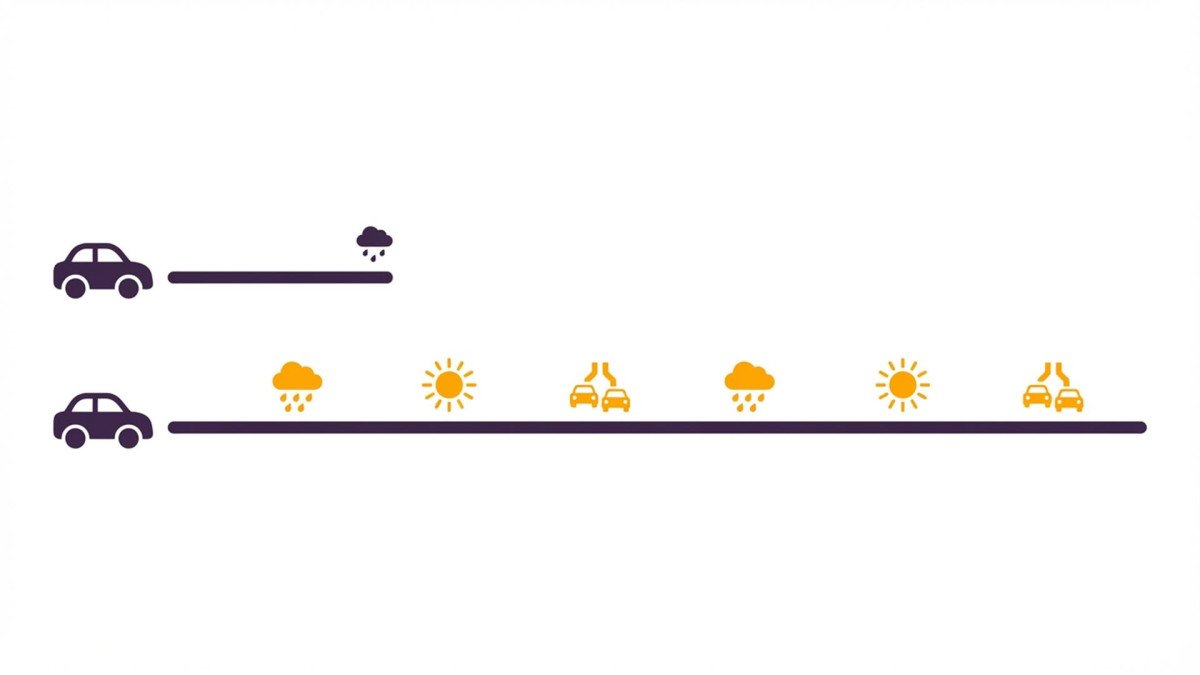
On shorter routes, the difference between open and enclosed isn’t as noticeable. The vehicle spends less time on the road, so there’s simply less that can happen. But once the trip stretches across states, things start to shift.
Take a common route like New York to Florida. It’s roughly 1,200 to 1,300 miles and usually takes around 3 to 5 days.
Now think about what happens during those few days. The car moves through different climates, traffic conditions, and road surfaces. It might start in cold rain, pass through heavy highway traffic, and end in heat and humidity. None of that is extreme on its own, but together, it creates constant exposure.
This is where it’s thought that most people underestimate the difference. It’s more about small things adding up over time rather than one big risk.
So while distance doesn’t automatically mean you need enclosed transport, it definitely makes you think twice about how much exposure you’re okay with.
Why Do Most People Choose Open Car Shipping?
Open transport is the default because it keeps things simple. It costs less, it’s easier to schedule, and it moves faster on most routes.
The price difference is the main reason. Open carriers move multiple vehicles at once, which lowers the cost per car. For everyday vehicles, that usually feels like the practical choice.
Availability also helps. On busy routes like New York to Florida, carriers run constantly, so vehicles get picked up faster without long delays.
In most cases, open transport works best when:
- the vehicle is used daily and doesn’t need special handling
- cost matters more than full protection
- you want quicker pickup on a common route
When Is Enclosed Car Shipping Worth It?
Enclosed transport starts to make sense when the vehicle requires more care than usual.
Luxury, classic or custom cars often fall into that category. Even minor exposure can affect their condition, so the added protection becomes part of the decision. This is how you avoid small but costly issues.
The price is higher, usually around 40–60% more, which reflects the limited capacity and controlled setup.
Distance adds it up as well. Longer trips mean more time on the road and that increases exposure to changing conditions.
Enclosed transport fits best when condition matters more than cost. It offers a level of control that standard shipping doesn’t provide.
Does Open Transport Increase Risk on Long Routes?
Open transport doesn’t make a shipment unsafe, but it does increase exposure over time. That’s the real difference.
On shorter trips, that exposure is limited. However, once the route stretches across several states, small factors start to build. Weather shifts along the way. One part of the route may be dry, while another brings rain or strong wind. Then there’s road debris, which becomes more common on busy highways. Add traffic density into the mix, and the vehicle simply spends more time around other moving cars and unpredictable conditions.
Individually, none of these are major risks. Together, they create what can be described as accumulated exposure. The longer the vehicle stays on the road, the more chances there are for minor impacts or environmental wear.
How Do Seasonal Trends Affect Car Shipping?
Seasonality has a direct impact on both pricing and availability, especially on high-demand routes.
A clear example is the New York to Florida corridor during snowbird season. From late fall through early spring, a large number of vehicles move south. Demand rises quickly, and as a result, carriers fill up faster than usual.
The consequence of that is that availability tightens. Pickup windows become less flexible, and pricing starts to shift upward. It’s not uncommon to see noticeable differences depending on the time of year.
Outside of peak months, the same route feels much easier to manage. There are still carriers available, but without the same pressure on schedules.
In practice, timing often matters just as much as distance. A well-timed booking can make the entire process smoother, while peak-season demand tends to limit options quickly.
What Factors Affect Car Shipping Cost the Most?
Several factors shape the final price, and distance is only one part of it.
Miles still matter, of course. A longer route increases fuel use and time on the road. However, route demand often has a stronger impact. A high-traffic corridor like New York to Florida tends to stay more competitive because carriers run that route regularly. Less common routes, on the other hand, can cost more simply due to limited availability.
Vehicle size also plays a role. Larger or heavier vehicles take up more space on the trailer, which affects how carriers plan their loads.
Then comes transport type. Enclosed shipping costs more because it carries fewer vehicles and offers added protection.
Timing can shift pricing as well. Flexible pickup windows make it easier to match with a carrier, while tight deadlines usually increase the cost.
How Do You Decide Between Open and Enclosed Transport?
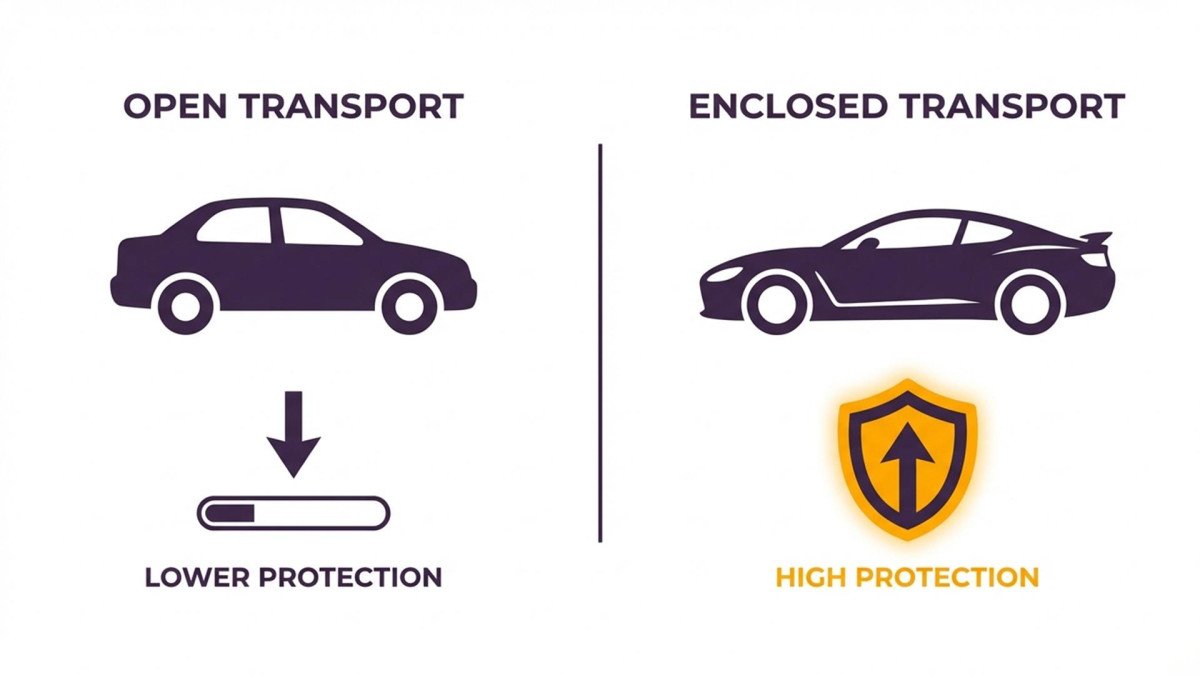
The decision becomes clearer once you focus on the vehicle and what matters most during the trip.
Open transport works best when:
- the vehicle is used regularly and doesn’t require special handling
- cost is a priority
- standard exposure during transit feels acceptable
Enclosed transport fits better when:
- the vehicle has higher financial or personal value
- maintaining condition is a top concern
- longer distance increases sensitivity to exposure
In most cases, the choice reflects how much protection feels necessary rather than the distance alone.
What Should a Reliable Car Shipping Process Look Like?
A reliable process feels structured from the start. It begins with a clear inspection at pickup, where the vehicle’s condition is documented before loading.
From there, secure loading matters. The vehicle should be positioned carefully and fixed in place to avoid unnecessary movement during transit. Along the route, minimal handling keeps the process controlled and reduces the chances of small issues.
At delivery, the same inspection is repeated. The vehicle is checked against the original record, so everything stays transparent.
Communication ties everything together. Updates don’t need to be constant, but they should be clear when it matters.
This is where working with a company like Rivalane makes a difference. A structured approach, combined with clear coordination, keeps the entire process predictable from pickup to delivery.
Final Thoughts: The Right Choice Depends on Exposure, Not Just Price
The decision comes down to exposure, not just cost.
Distance increases time on the road. Timing affects availability. The vehicle itself changes how much risk feels acceptable. Together, these factors shape the right choice more than price alone.
Open transport works well for standard vehicles and keeps things simple. Enclosed transport makes more sense when condition matters and exposure becomes a concern.
In the end, it’s about balance. The route sets the conditions, and the vehicle defines how much protection is worth it.