
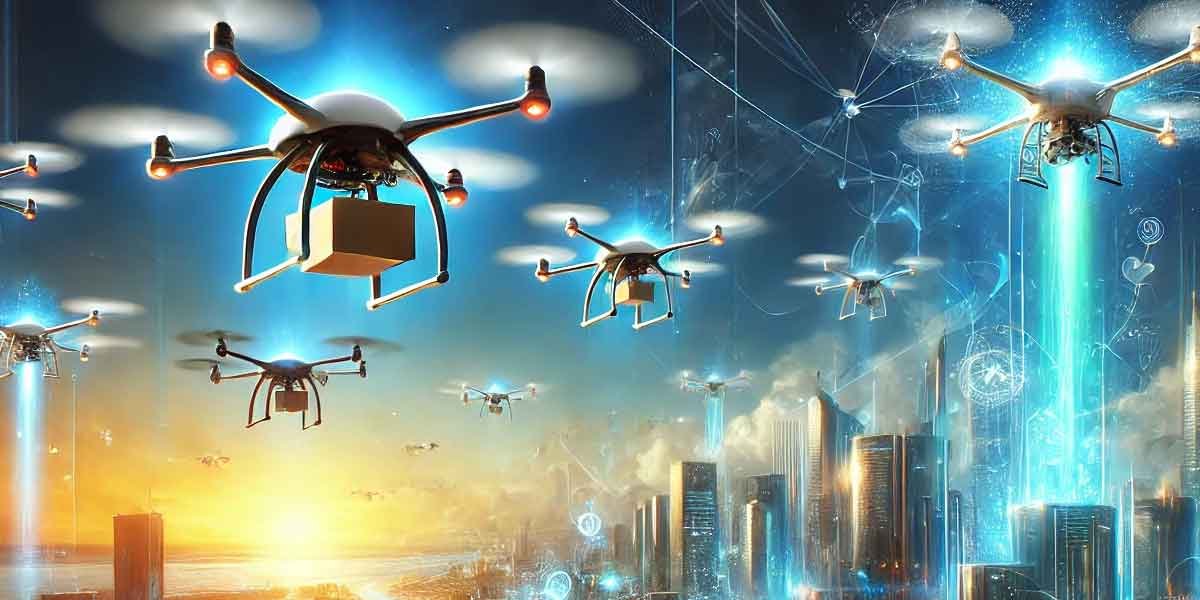
The world of commercial aviation is undergoing a massive shift, driven not by traditional mechanics, but by silicon chips and smart software. Just a decade ago, flying a drone meant keeping both eyes firmly on the aircraft and relying entirely on manual dexterity. Today, modern drones function more like highly advanced flying computers. They gather immense amounts of real-time data, process complex environments, and even make split-second decisions without human intervention. At the heart of this revolution are advanced mobile applications and artificial intelligence. These technologies are fundamentally changing how operators interact with their aircraft, moving the industry from simple hobbyist photography to critical enterprise solutions.
Table of Contents
The Rise of the Automated Commercial Fleet
The demand for intelligent flight systems is surging across multiple industries. From precision agriculture and mining surveys in regional Australia to urban delivery logistics, businesses are scaling their aerial operations at an unprecedented rate. This rapid adoption is backed by compelling economic data. According to industry analysis by Grand View Research, the global commercial drone market size was estimated at USD 30.02 billion in 2024 and is projected to reach USD 54.64 billion by 2030.
This monumental growth represents a compound annual growth rate of 10.6 percent from 2025 to 2030, fuelled heavily by the integration of machine learning for data-driven decision-making. As the hardware becomes more capable and businesses find new use cases, the software that controls these devices must evolve to handle heavier commercial workloads safely and efficiently. Proper education is vital here, and completing a certified UAV pilot course is the first step for operators looking to navigate these advanced technological frameworks successfully.
How Mobile Software Transforms Flight Telemetry
Modern flight software has moved far beyond basic directional controls and simple camera triggers. Today, a pilot’s smartphone or tablet acts as a comprehensive command centre. Mobile telemetry apps provide live video feeds, battery diagnostics, wind speed analysis, and automated flight path mapping in a single unified interface.
However, the sheer volume of data presented on these screens can be overwhelming for untrained operators. Because these mobile platforms handle highly complex aerospace calculations, understanding how to read and respond to the software is just as important as knowing how to use the control sticks. Professional training ensures that pilots can properly interpret app-based telemetry and intervene safely if the software encounters an unexpected error or a sudden change in weather conditions. Without a solid foundation, operators risk misinterpreting crucial flight telemetry.
Artificial Intelligence in Navigation and Obstacle Avoidance
The integration of artificial intelligence is where drone technology truly begins to mirror science fiction. Machine learning algorithms now allow drones to map their surroundings in three dimensions and identify potential hazards autonomously. We are seeing incredible parallels across the broader tech landscape. For instance, just as machine learning has automated complex creative workflows across modern consumer software, as seen in the best AI lip sync generator tools of recent years, these same technological leaps are enabling drones to process real-time environmental data and automate intricate navigation tasks.
AI integration provides several major operational benefits for commercial pilots:
- Dynamic routing: Algorithms can recalculate flight paths mid-air to avoid sudden obstacles like flocks of birds, cranes, or other aircraft.
- Subject tracking: Advanced visual processing allows the camera to lock onto and follow moving targets automatically, which is vital for search and rescue operations.
- Predictive maintenance: AI software analyses motor efficiency and battery health over time to warn pilots of potential mechanical failures before they occur.
- Automated landing: Spatial recognition helps the drone identify safe landing zones in emergencies when GPS signals drop out or become scrambled.
Preparing for the Next Generation of Flight
As we look toward the future, the combination of 5G connectivity and AI will push mobile drone apps even further. High-speed, low-latency networks will allow drones to offload their heavy processing requirements to cloud-based servers. This means smaller aircraft will be able to perform incredibly complex tasks, such as rendering 3D thermal maps in real time, without draining their batteries on internal computing power.
We can also expect to see swarm technology become more accessible through standard mobile apps. A single operator might soon coordinate a fleet of ten or twenty drones from a single iPad, with AI managing the spacing, speed, and communication between each individual unit.
The days of purely manual drone flight are rapidly fading. The future of the industry lies in the seamless partnership between human oversight and advanced automated software. By leveraging the immense power of mobile applications and artificial intelligence, pilots can execute safer flights, capture better data, and unlock entirely new commercial possibilities.