
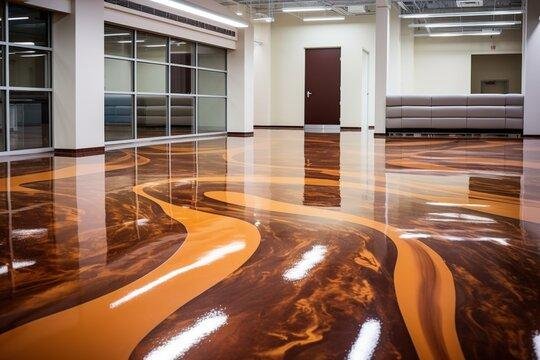
If you have ever walked into a showroom, garage, or modern apartment in Dubai and noticed that incredibly smooth, shiny floor that looks almost like glass — there is a very good chance you were looking at epoxy flooring. It has taken over homes, offices, warehouses, and commercial spaces across the UAE, and for very good reason. But here is something most people do not think about when they are picking a floor: not every type of epoxy flooring is built to handle Dubai’s extreme weather conditions. The intense heat, occasional humidity, heavy dust, and strong UV rays can break down certain epoxy coatings faster than you would expect.
So if you are planning to get epoxy flooring installed in your Dubai home or business, this guide is going to help you understand which types of epoxy actually hold up well in this climate — and which ones you should probably avoid.
Table of Contents
Why Dubai’s Climate Is So Demanding on Flooring
Before we get into the different types, it helps to understand what your floor is really up against in Dubai. Temperatures in summer can easily exceed 45°C outdoors, and even indoor concrete floors heat up significantly when buildings are exposed to direct sunlight all day. This thermal stress — the constant expansion and contraction of materials as they heat up and cool down — can cause certain coatings to crack, peel, or bubble over time.
Dubai also sits close to the sea, which means coastal areas like Dubai Marina, JBR, and Palm Jumeirah experience regular humidity. Moisture that gets trapped beneath an epoxy coating can cause it to lift or develop a cloudy appearance. Add to this the fine desert dust that gets into everything during sandstorm season, and you start to understand why choosing the right epoxy type is so important.
The good news is that high-quality epoxy flooring Dubai , when chosen and installed correctly, is one of the most durable floor coating options available anywhere in the world. The key is knowing which formulation suits your specific environment.
100% Solid Epoxy Flooring
If you want the most durable epoxy flooring available and you are serious about longevity in Dubai’s climate, 100% solid epoxy is the one to go for. As the name suggests, this type of epoxy contains no water or solvents — it is entirely made up of the epoxy resin and hardener compounds. When it cures, it forms an incredibly thick, hard, and dense surface that is extremely resistant to heat, heavy traffic, chemicals, and physical impact.
This type of epoxy is widely used in Dubai’s industrial and commercial spaces — think warehouses in Al Quoz, vehicle showrooms in Sheikh Zayed Road, and large retail outlets across the city. But it is also increasingly being chosen for high-end villa garages, basement floors, and even kitchen and living area floors in premium residential properties.
The reason 100% solid epoxy performs so well in Dubai is that it does not contain volatile compounds that evaporate over time. This means it does not shrink or become brittle as quickly as thinner coatings. It also lays down a thick film — usually between 3 to 6 millimeters — which gives it excellent resistance to the thermal cracking that affects lesser coatings in the summer heat. If you are investing in a floor that you want to last ten years or more in Dubai, this is your best option.
Water-Based Epoxy Flooring
Water-based epoxy is one of the most commonly used types for residential spaces across Dubai. It uses water as its carrier instead of solvents, which makes it lower in odor, easier to apply, and more environmentally friendly than some other options. It is also more affordable than 100% solid epoxy, which makes it a popular choice for homeowners who want a quality finish without a very high price tag.
In Dubai apartments and villas, water-based epoxy is often used for interior spaces like living rooms, bedrooms, and hallways. It produces a clean, smooth finish that looks very attractive and is easy to maintain. However, it is worth knowing that water-based epoxy creates a thinner coating layer than solid epoxy, which means it may not be the best choice for areas that get very heavy foot traffic or vehicle movement.
For indoor residential use in Dubai — especially in air-conditioned spaces — water-based epoxy performs very well and lasts a long time. The key is proper surface preparation before application. The concrete floor must be completely clean, dry, and free from any moisture before the epoxy is applied. In areas near the coast or in older buildings where moisture may come up through the concrete slab, a moisture-barrier primer should always be applied first.
Solvent-Based Epoxy Flooring
Solvent-based epoxy uses chemical solvents as the carrier for the resin. This gives it excellent penetration into concrete surfaces, creating a very strong bond. It is harder and more chemical-resistant than water-based epoxy and is often used in industrial and commercial settings where floors are exposed to oils, fuels, or heavy machinery.
In Dubai, solvent-based epoxy is commonly found in auto workshops, factories, and warehouses across the industrial areas of Dubai Investment Park, Jebel Ali, and Ras Al Khor. It handles heat reasonably well and provides a tough, long-lasting surface in high-use environments.
The main drawback of solvent-based epoxy is the strong odor it releases during application. Good ventilation is absolutely necessary, and the space usually needs to remain unoccupied for a longer period after application compared to water-based options. In a fully occupied residential building or an office space that cannot be shut down for long, this can be a practical challenge. That said, for industrial and semi-commercial applications in Dubai, solvent-based epoxy remains a very reliable and widely trusted choice.
UV-Resistant Epoxy Flooring
Here is something many people do not realize: standard epoxy flooring is not UV stable. If you apply regular epoxy to an outdoor surface or a space that gets direct sunlight through large windows — like a sunroom, a rooftop, a covered outdoor terrace, or a balcony — it will yellow and fade fairly quickly. In Dubai, where sunlight is intense for most of the year, this is a very real problem.
UV-resistant epoxy, also known as UV-stable or UV-cured epoxy, is specifically formulated to handle prolonged exposure to sunlight without yellowing or breaking down. It contains special additives or is topped with a polyurethane or polyaspartic topcoat that shields the epoxy from UV damage. This type of coating is the right choice for any outdoor or semi-outdoor area in Dubai.
Many Dubai property owners use UV-resistant epoxy on rooftop areas, covered parking spaces, poolside decking, and outdoor walkways. It holds its color and gloss far longer than regular epoxy in sunny conditions and requires less frequent recoating or touch-up work. If your project involves any area that sees natural sunlight, always ask your flooring contractor specifically about UV-stable formulations.
Polyaspartic Epoxy Coating
Polyaspartic coatings are a newer generation of floor coatings that are often grouped alongside epoxy but are technically a type of polyurea coating. They have gained significant popularity in Dubai over the past few years because they offer several advantages that are particularly relevant to this climate.
First, polyaspartic coatings cure much faster than traditional epoxy. While standard epoxy can take 24 to 72 hours to fully cure, polyaspartic coatings can cure in a matter of hours. This is a big advantage in a busy commercial or industrial environment in Dubai where downtime needs to be minimized. Just like Rubber Flooring Dubai solutions that are chosen for their quick installation and minimal disruption, polyaspartic coatings appeal to business owners who simply cannot afford to shut operations down for days at a time. Second, polyaspartic coatings are inherently UV stable, which means they do not yellow when exposed to sunlight — a major plus in the UAE. Third, they handle temperature extremes very well and are less prone to thermal cracking than many standard epoxy formulations.
They are also highly resistant to abrasion and chemical spills, making them an excellent choice for car showrooms, hotel lobbies, shopping mall floors, and food processing areas. The main consideration with polyaspartic coatings is that they require very skilled application. Because they cure so quickly, any mistakes during installation are difficult to correct. Always work with an experienced flooring company if you choose this option.
Metallic Epoxy Flooring
Metallic epoxy flooring has become extremely popular in Dubai’s interior design scene. You have probably seen it in luxury hotel lobbies, high-end showrooms, and stylish restaurant interiors — it creates a stunning, three-dimensional effect that looks almost like swirling marble or molten metal. The visual impact is remarkable.
From a durability standpoint, metallic epoxy is made using 100% solid or high-solids epoxy resin mixed with metallic pigment powders. This gives it excellent thickness and hardness while also providing that dramatic visual finish. When sealed with a UV-resistant topcoat — which is standard practice for good installers in Dubai — metallic epoxy floors hold up very well in air-conditioned interior spaces.
It is worth noting that metallic epoxy is best suited for indoor use. While the topcoat provides some UV protection, the metallic pigments can still shift in appearance with prolonged outdoor sun exposure. For indoor spaces in Dubai — whether a villa living room, a high-end retail shop, or a corporate office — metallic epoxy delivers both beauty and durability in equal measure.
Flake or Chip Epoxy Flooring
Epoxy flake flooring — sometimes called chip epoxy or broadcast epoxy — involves broadcasting colored vinyl flakes or chips onto a wet epoxy base coat. Once cured, a clear topcoat is applied over the flakes to seal everything in. The result is a textured, multi-colored surface that looks attractive and provides excellent slip resistance.
This type of flooring is extremely popular in Dubai garages, car parking areas, gym floors, and commercial kitchens. The texture created by the flakes gives the floor a slightly rough surface that reduces the risk of slipping, which is particularly important in areas that may get wet. The textured surface also hides minor scratches, scuffs, and dust far better than a plain glossy epoxy finish.
Flake epoxy is also quite customizable — you can choose from a huge range of flake colors and sizes to match your interior palette. For Dubai homeowners who want a floor that is both practical and visually appealing in spaces like garages or laundry rooms, flake epoxy is one of the most sensible and long-lasting choices available.
The Role of Surface Preparation in Making Epoxy Last Longer
No matter which type of epoxy flooring you choose, there is one factor that determines how long it will last more than anything else — and that is how well the concrete surface is prepared before the epoxy is applied. In Dubai, this step is absolutely critical.
Concrete floors in older Dubai buildings sometimes have moisture rising from below, especially in areas close to the water table or in coastal neighborhoods. If moisture is present when epoxy is applied, it will cause the coating to bubble, lift, or delaminate within months. A professional flooring contractor should always test the moisture level of the concrete slab before starting work and apply a suitable primer or moisture barrier if needed.
The concrete surface also needs to be mechanically ground or shot-blasted before epoxy application. This process opens up the pores of the concrete, creating a rough surface that the epoxy can bond to strongly. Skipping this step — or just cleaning the floor with chemicals and applying epoxy on top — is one of the most common reasons why epoxy floors fail prematurely in Dubai.
Always choose a flooring company that takes surface preparation seriously. It may add a small amount of time to the job, but it makes an enormous difference to how long your floor will last.
How to Choose the Right Epoxy Flooring for Your Dubai Space
By now you have a good understanding of the main epoxy types available and how they perform in Dubai’s climate. Choosing the right one comes down to a few simple questions. Is the space indoors or outdoors? Does it get direct sunlight? How much foot or vehicle traffic does it receive? What is your budget? And how quickly do you need the floor to be back in use?
For indoor residential spaces in Dubai like living rooms, bedrooms, and kitchens, water-based epoxy or metallic epoxy with a UV-stable topcoat works very well. For garages, gyms, and utility areas, flake epoxy or 100% solid epoxy is the smarter choice. For industrial and commercial spaces, 100% solid epoxy, solvent-based epoxy, or polyaspartic coatings will give you the best long-term performance. For any outdoor or sunlit area, always insist on UV-resistant formulations.
Final Words
Dubai is not an easy environment for flooring. The heat alone is enough to ruin a poorly chosen or badly installed floor within a year or two. But when you choose the right type of epoxy for your specific space, have it installed by professionals who know what they are doing, and maintain it properly, epoxy flooring can genuinely last for many years — often a decade or more — while still looking beautiful.
It is one of the most cost-effective, durable, and visually impressive flooring solutions available in the UAE today. Whether you are a homeowner looking to upgrade your villa, a business owner fitting out a new commercial space, or a developer working on a large project across Dubai, understanding which epoxy type suits your needs will save you time, money, and frustration in the long run. Choose wisely, prepare the surface properly, and your epoxy floor will be one of the best decisions you make for your property.