
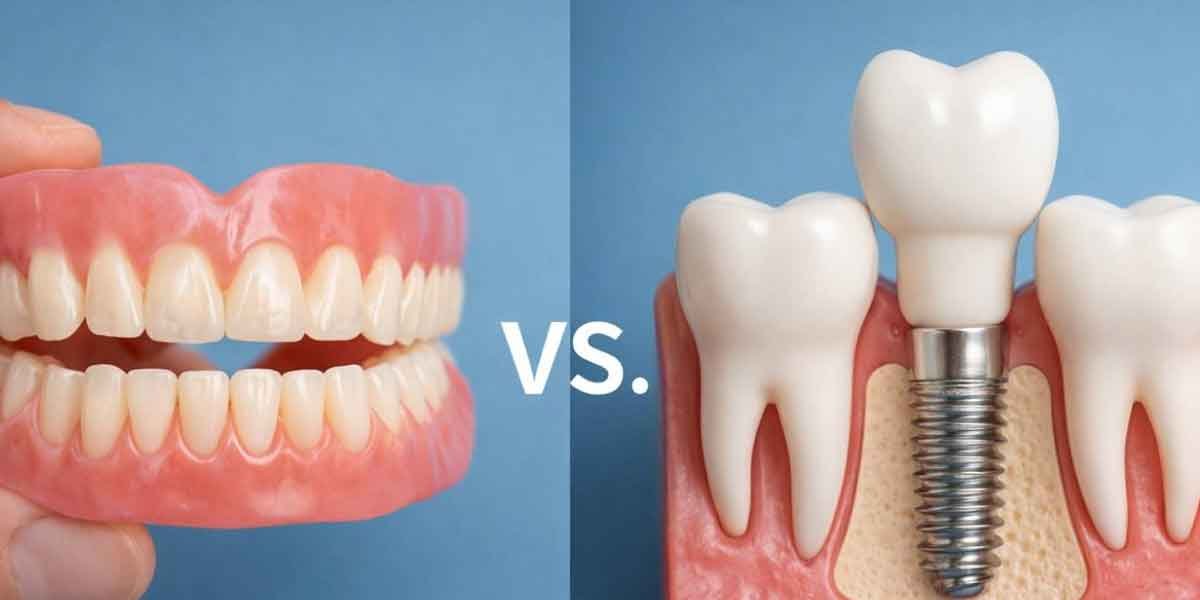
The decision between dental implants and dentures significantly impacts a person’s comfort, confidence, and oral health. Both are treatment options for missing teeth. Both offer unique benefits, and understanding how they differ can assist patients in determining the right choice for them. In this article, we will go through the features, advantages, and things to consider behind each of the options.
Table of Contents
What Are Dental Implants?
Dental implants are metal posts that are embedded in your jawbone to replace lost teeth. They function as artificial roots that support crowns or bridges. Over time, the bone bonds to the post, and the implants become a part of the mouth, serving as a stable foundation for replacement teeth. This procedure gives a more natural appearance and sensation, often resembling natural teeth very closely. In many cases, people searching for the best dental implants Las Vegas focus on long-term stability, since implants bond with the jawbone and provide a natural look and feel over time.
Understanding Dentures
Dentures are removable devices to replace missing teeth and the surrounding tissue. They are available full or partial, depending on how many teeth must be substituted. To add on, full dentures are placed on the gums, and partials are attached to the rest of the natural teeth. Dentures are fitted to each individual’s mouth, and as the shape of the mouth changes over time, the fit of the dentures may also need to be adjusted.
Comfort and Stability
Implants usually offer greater comfort. They are anchored in the jaw, so they also do not move or irritate the gums. Such stability minimizes the chances of developing sores in the mouth as well as speech problems. Unlike traditional dentures, there are times when they may shift (eating/talking). But, for some, adhesives to keep dentures in place also impact comfort and confidence.
Appearance and Confidence
Many people have found that implants create a more natural appearance. The crowns on implants are designed to mimic the surrounding teeth, to the point where they can become indistinguishable from the actual tooth. Even though dentures can appear very natural, the fit or the color sometimes does not match exactly. Dentures may be seen as unstable or seem less natural as the jaw gradually loses bone.
Maintenance and Care
Unlike the common perception, maintaining implants is similar to maintaining natural teeth. Maintaining excellent oral hygiene with regular brushing, flossing, and routine dental visits ensures that implants have a strong, healthy life span. Dentures need to be taken out every day for cleaning and soaking to prevent odor and bacterial buildup. Both options are susceptible to periodontal issues or infections if not taken care of properly, which means optimal hygiene is essential.
Longevity and Durability
With proper care, implants are designed to last for several years or even decades. Unlike your natural dentist-decayed roots, titanium posts resist decay and thus are ideally placed to support crowns dedicated to chewing. Although durable, dentures often need refitting or replacement about every five to ten years because gum and bone structure change. It is this longevity that makes implants a popular solution for many who suffer from tooth loss.
Procedure and Recovery
Getting implants is a staggered process. Initially, the post is carefully inserted in the jaw. It may take months of healing before the permanent crown is affixed. It takes less time to recover after denture placement. The majority of patients get their dentures in weeks, and if any discomfort does present, you can make some changes.
Cost Considerations
Typically, implants are more expensive upfront because there are surgery and material costs involved. Nonetheless, their durability can cancel future costs. While dentures tend to be less expensive at first, replacements and upkeep can result in a higher overall cost down the road. For many patients, insurance coverage and payment plans may dictate the choice.
Suitability for Different Needs
Implants are not for everyone. It requires enough bone density and a good state of the gums for the installation to be successful. Dentures may be a better option for severe gum disease or bone resorption, as they don’t rely on the jawbone for support. The ideal solution depends on the oral health of each patient and their lifestyle needs.
Conclusion
Both dental implants and dentures offer a reliable solution for missing teeth. Implants provide stability, durability, and a natural look, while dentures deliver affordability and flexibility. Consulting a dental professional ensures each person receives guidance based on their unique needs. Considering comfort, appearance, cost, and oral health, individuals can choose the best path to a confident smile.